
10 Things to Help your Mental Health
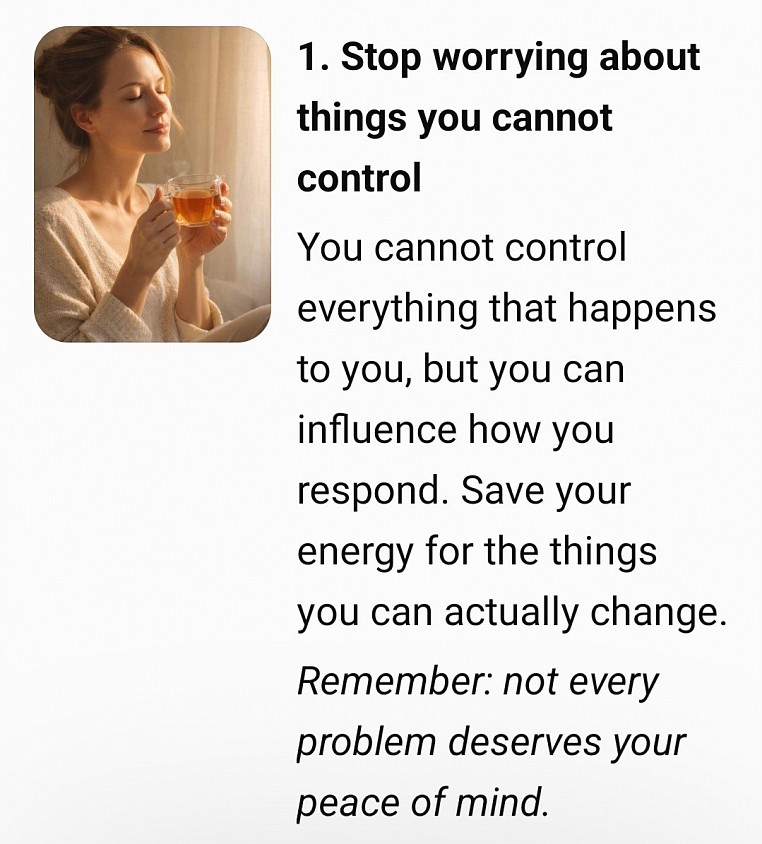
1. Don't worry about things we can't change.
Worrying about things we cannot control often takes away our happiness in the present moment and fills our minds with unnecessary stress and anxiety. We spend so much time thinking about what might happen, what others might think, or how situations beyond our control might turn out, forgetting that none of this changes the outcome. The truth is that we cannot control other people's thoughts, actions, opinions or decisions, nor can we change what has already happened or predict everything that lies ahead. What we can control is how we respond, where we direct our attention and the choices we make each day. Learning to let go doesn't mean we don't care; it means recognising where our energy is best spent. Instead of worrying about what might happen, focus on what you can do today. Accept what you cannot change, have confidence in your ability to cope with whatever comes your way, and remind yourself that life becomes much more peaceful when you stop trying to control everything. Don't let tomorrow's uncertainties steal today's happiness.
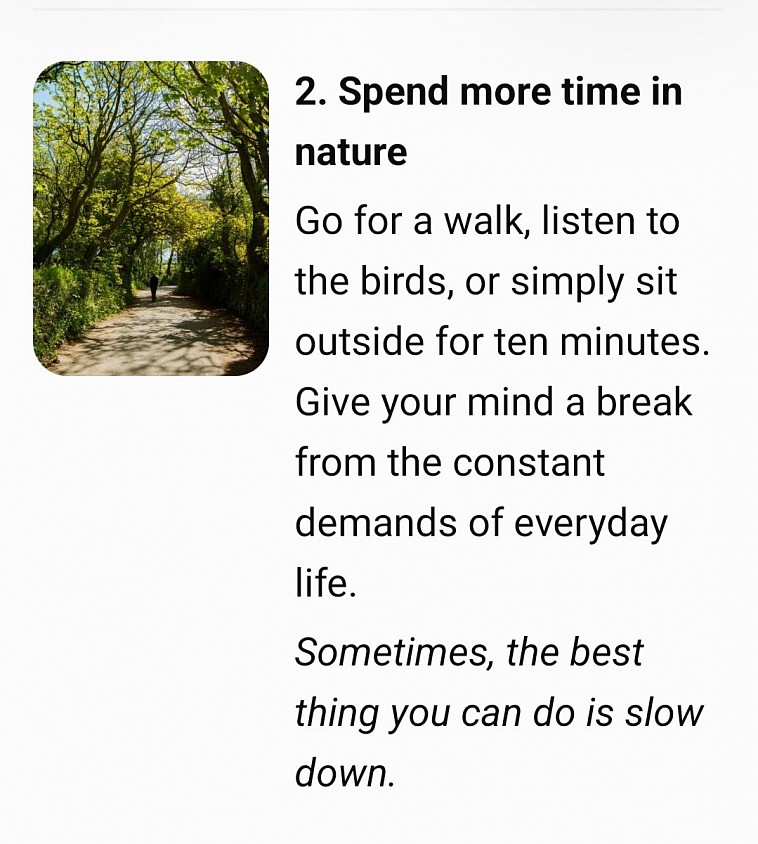
2. Spend more time in nature
Spending time in nature is one of the simplest yet most powerful ways to improve our physical and mental wellbeing. Whether it's walking along the beach, sitting in a garden, wandering through woodland or simply enjoying the fresh air, being surrounded by nature gives us an opportunity to slow down, escape the pressures of everyday life and reconnect with ourselves. The sights, sounds and smells of the natural world can help calm an anxious mind, reduce stress, lift our mood and give us a fresh perspective on life. Nature reminds us that life doesn't always have to be rushed, that it's okay to pause, breathe and simply enjoy the moment. It encourages us to be more mindful, appreciate the little things and feel connected to something bigger than ourselves. We don't always need expensive holidays or elaborate activities to feel better; sometimes a little time outdoors is all it takes. Step outside, take a deep breath, leave your worries behind for a while and allow nature to restore your mind, body and spirit.
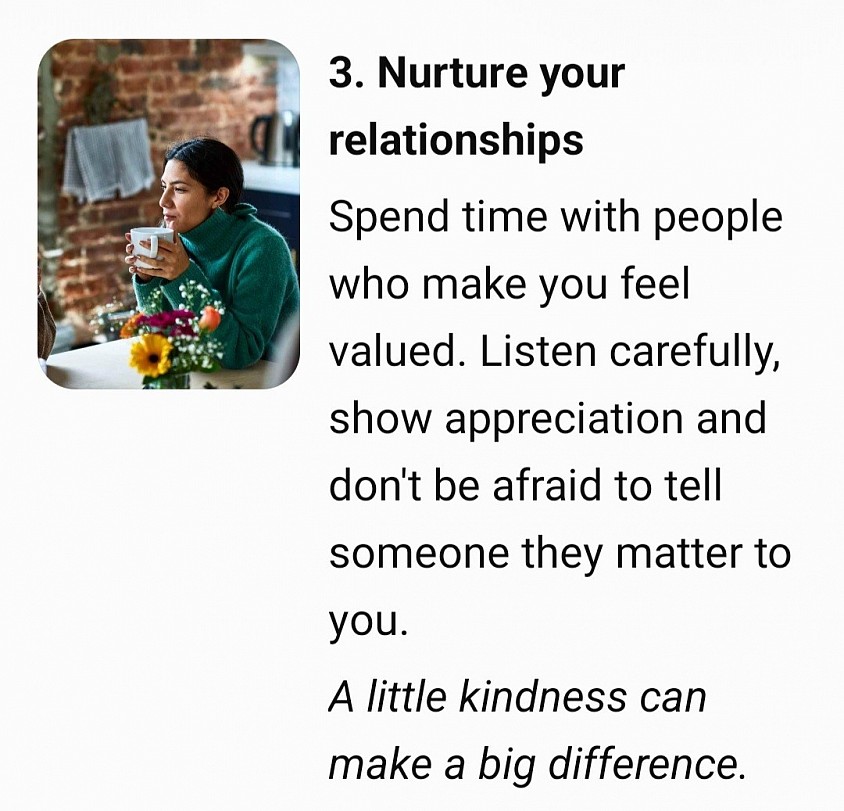
3. Nurture your relationships
Nurturing our relationships is one of the most important investments we can make in our happiness and emotional wellbeing. Human beings are naturally social, and having meaningful connections with family, friends and the people around us gives us a sense of belonging, security and purpose. Good relationships provide us with support during difficult times, people to share our successes with and someone to turn to when life feels overwhelming. However, strong relationships don't just happen; they need time, attention, kindness and understanding. A simple phone call, a thoughtful message, spending quality time together or genuinely listening to someone can make a huge difference. It's important to remember that relationships are not about how many people we know, but about the quality of the connections we build. We should make time for the people who bring positivity into our lives, show appreciation for those who care about us and never take meaningful connections for granted. At the end of the day, it's often the people we share our lives with, rather than the things we accumulate, that bring us the greatest happiness.
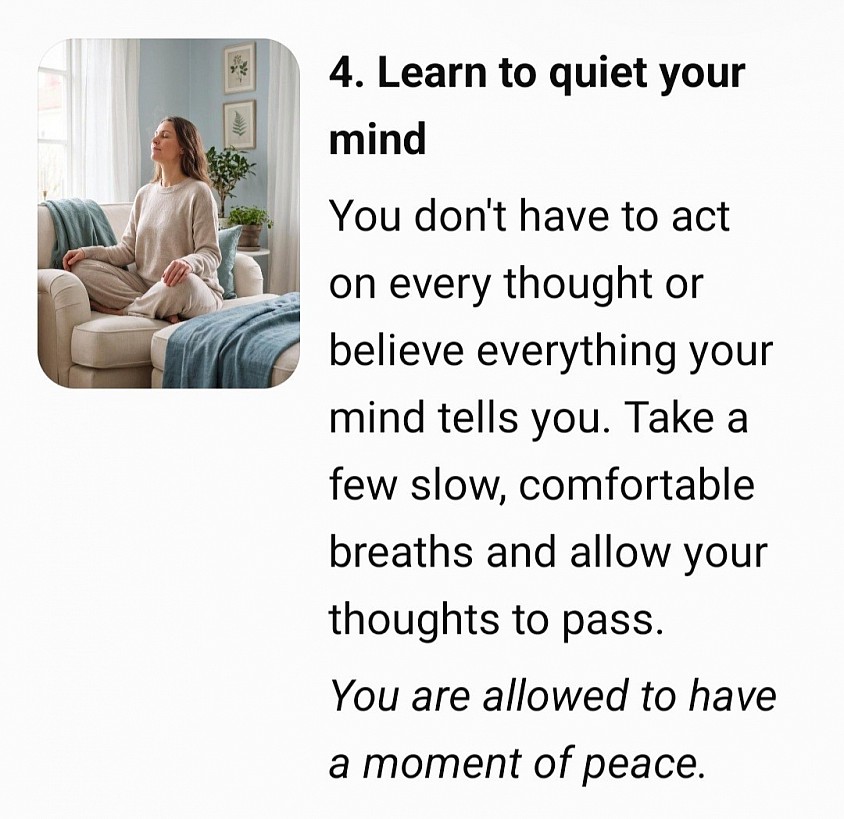
4. Leaning to Quiet your Mind.
Learning to quiet your mind is one of the greatest gifts you can give yourself. In a world where we are constantly surrounded by noise, demands, distractions and endless thoughts, it's important to find moments when we can simply switch off and allow ourselves to be still. Our minds can become overwhelmed by worrying about the future, dwelling on the past or overthinking situations that may never happen. Taking time to slow down, breathe deeply and bring our attention back to the present moment can help create a sense of calm and inner peace. This might be through meditation, listening to music, walking in nature, practising mindfulness or simply sitting quietly for a few minutes each day. Remember, you don't have to respond to every thought that enters your mind, and you don't have to solve every problem all at once. Sometimes the most helpful thing you can do is give yourself permission to stop thinking, stop worrying and just be. A quiet mind doesn't mean an empty mind; it means learning not to let every thought disturb your peace.
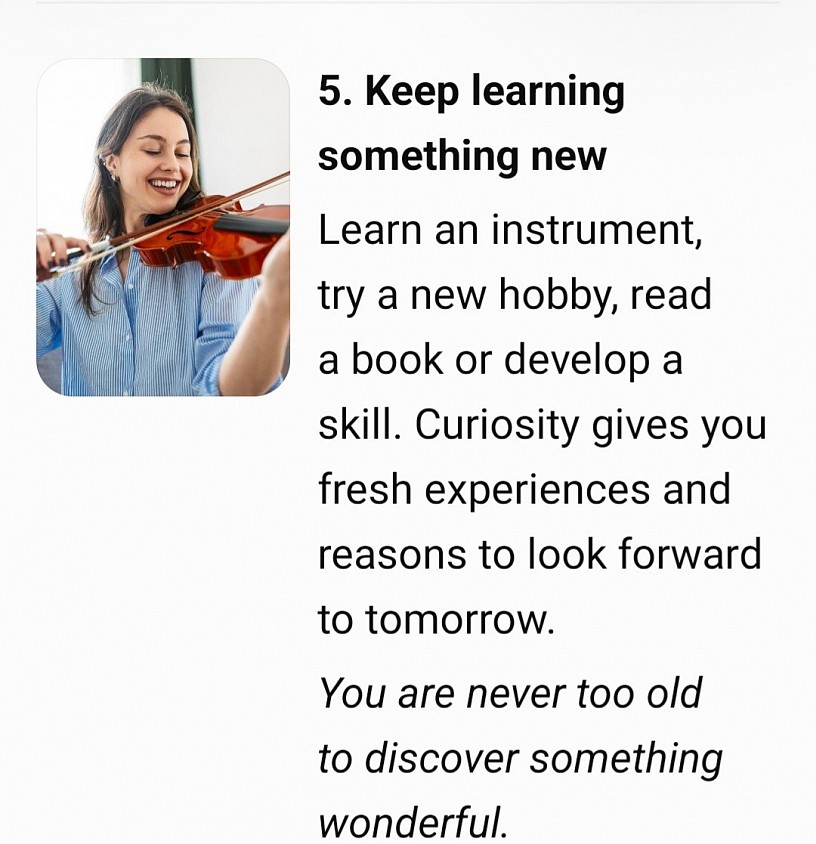
5. Keep Learning Something New.
Continuing to learn something new throughout life is one of the best ways to keep our minds active, maintain our curiosity and give ourselves a sense of purpose. Learning isn't just something we do at school or when we're young; it's an opportunity that stays with us at every age. Whether it's taking up a new hobby, learning a musical instrument, reading a book, developing a skill or simply discovering something that interests us, new experiences challenge our brains and help us grow. Learning can boost confidence, improve self-esteem, stimulate creativity and give us something positive to focus our attention on. It can also open doors to new experiences, friendships and opportunities that we might never have considered. Most importantly, it reminds us that we are never too old to change, improve or discover something wonderful about ourselves. We don't have to become experts or achieve perfection; the enjoyment often comes from the process itself. Keep being curious, keep challenging yourself and never stop learning, because personal growth doesn't have an age limit.
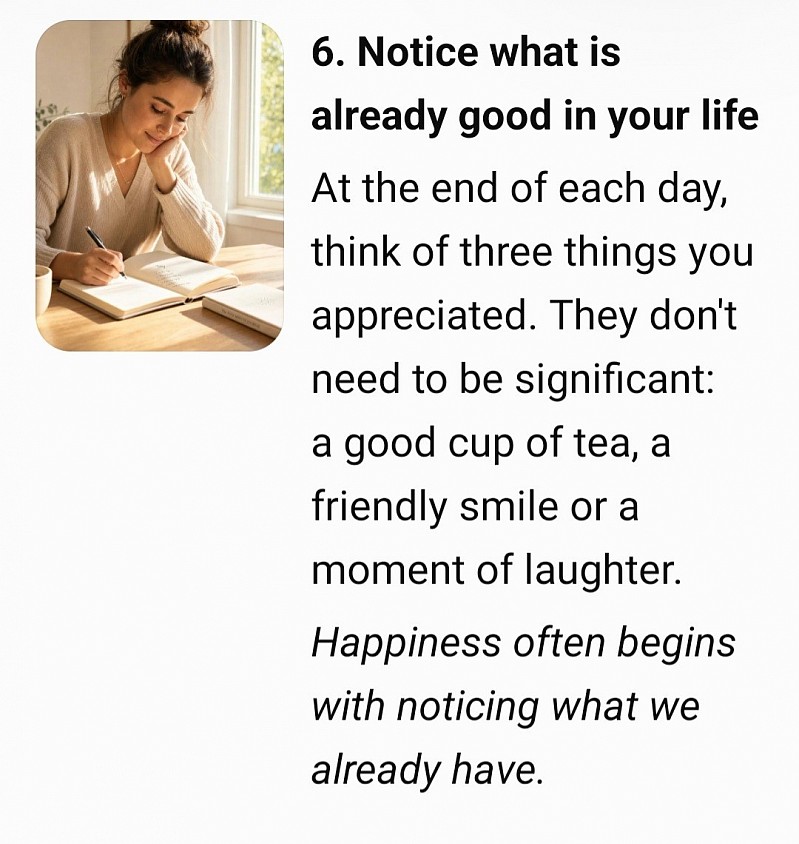
6. Notice what is already good in your life.
Learning to recognise and appreciate what is already good in our lives can make a tremendous difference to our happiness and overall wellbeing. It's so easy to become caught up in what we don't have, what we wish were different or what we think would make us happier, that we sometimes overlook the many positive things already around us. Taking time to notice the little things – a beautiful sunny morning, a kind word from someone, a good conversation, a loving family, a loyal friend or simply having a peaceful moment to ourselves – helps us develop a greater sense of gratitude and contentment. This doesn't mean ignoring life's difficulties or pretending everything is perfect; it means choosing not to let the negatives overshadow the positives. When we regularly focus on what is going well, we begin to see life differently, appreciating what we have rather than constantly chasing what we haven't. Happiness isn't always about changing our circumstances; sometimes it's about changing what we choose to notice. Don't become so busy wishing for a better life that you forget to appreciate the good things already in the one you have.
7. Stop expecting yourself to do everything.
It's important to stop expecting ourselves to get everything done because constantly trying to keep up with endless tasks and responsibilities can leave us feeling exhausted, overwhelmed and never quite good enough. We often put unnecessary pressure on ourselves to be productive, achieve more and meet unrealistic expectations, forgetting that we are human beings, not machines. There will always be another job to do, another email to answer or another responsibility waiting for our attention. Learning to accept that we cannot do everything, all of the time, allows us to let go of unnecessary guilt and give ourselves permission to rest. It's perfectly okay to slow down, postpone something until tomorrow or simply decide that enough is enough for today. Our worth isn't measured by how much we accomplish, and taking time for ourselves isn't being lazy; it's looking after our wellbeing. Focus on what really matters, celebrate what you have achieved rather than worrying about what remains unfinished, and remember that life is meant to be lived, not just spent ticking things off a to-do list. You don't have to do it all, be everything to everyone or have everything perfectly organised. Sometimes, doing enough is more than enough.
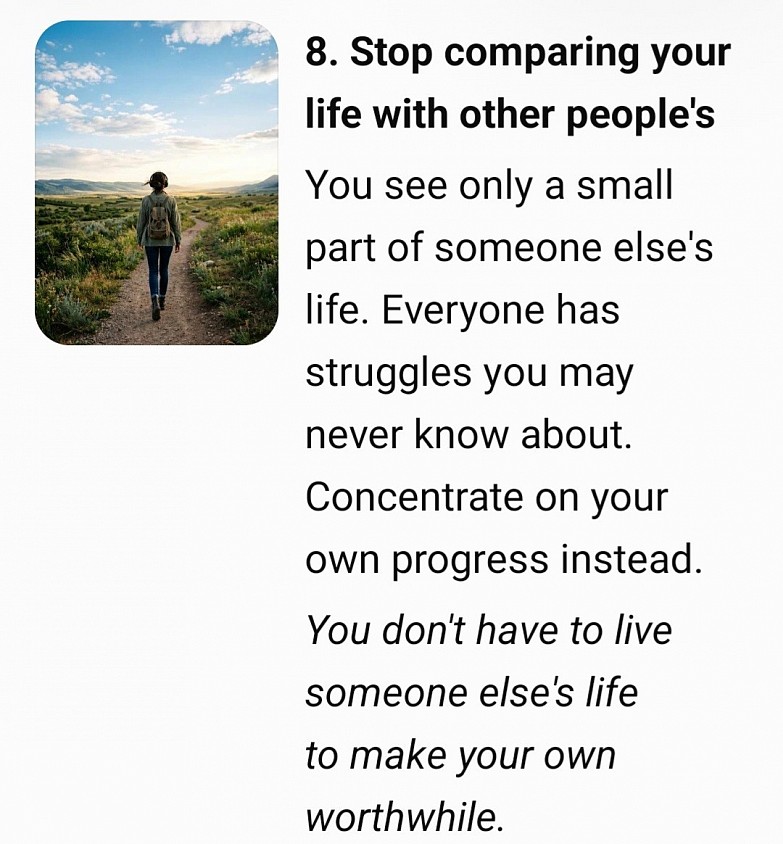
8. Stop comparing yourself with others.
It's important to stop comparing ourselves with others because doing so can rob us of our confidence, happiness and appreciation of our own lives. We often look at other people and see what they have achieved, how they look, what they own or how successful they appear to be, without ever knowing the challenges, insecurities or difficulties they may be facing behind the scenes. Constant comparison can make us feel that we are somehow falling behind or that our own lives aren't good enough. But the truth is that we are all different, with our own experiences, strengths, weaknesses and journeys through life. There is no universal timetable for success, happiness or personal achievement, and we don't need to measure our worth against somebody else's. Instead of looking sideways at what others are doing, try looking at how far you have come yourself. Celebrate your own progress, recognise your individual qualities and focus on becoming the best version of you, rather than trying to be somebody else. Your life isn't a competition, and you don't need to be ahead of anyone else to be exactly where you need to be.
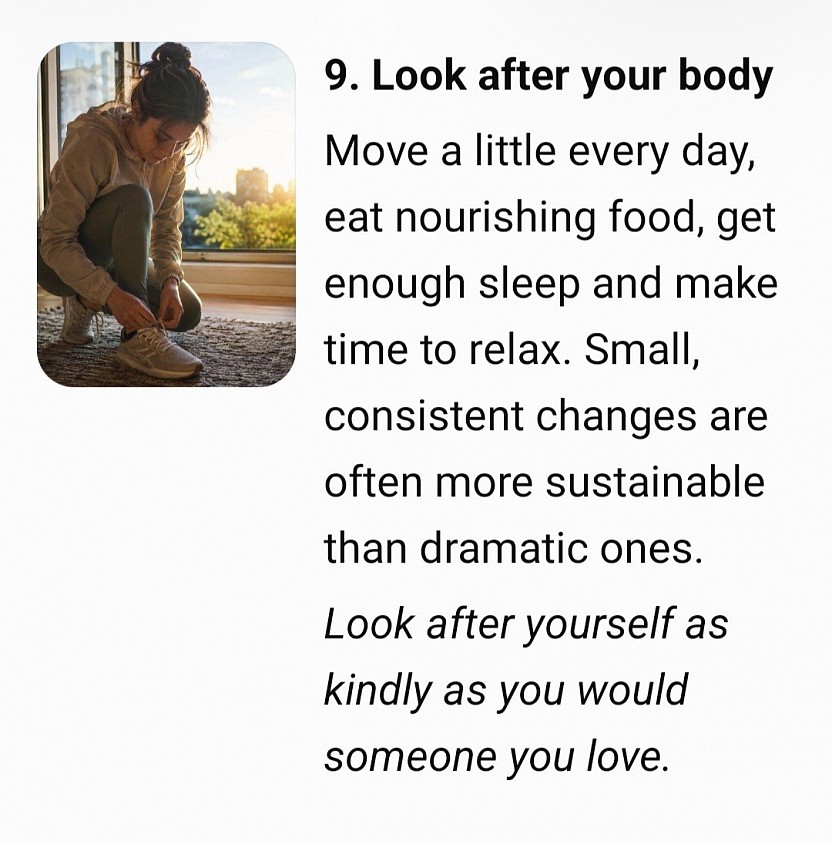
9. Look after your body.
Looking after your body is one of the most important ways of showing yourself kindness and respect. Our bodies work incredibly hard for us every single day, often without us giving them much thought, so it's important that we give them the care and attention they deserve. Eating a balanced diet, staying hydrated, getting enough sleep, keeping physically active and allowing ourselves time to rest all play an important part in maintaining good health and wellbeing. Taking care of our physical health can also have a positive effect on our mental health, helping to improve our mood, reduce stress, boost confidence and give us more energy to enjoy life. It's not about having the perfect body, following strict routines or trying to look a certain way; it's about feeling healthy, strong and comfortable in yourself. Small, positive changes made consistently can have a big impact over time. Remember that your body is the only place you have to live, so treat it with care, patience and appreciation. Don't wait until your body tells you something is wrong before you start looking after it. Make your health a priority, not an afterthought.
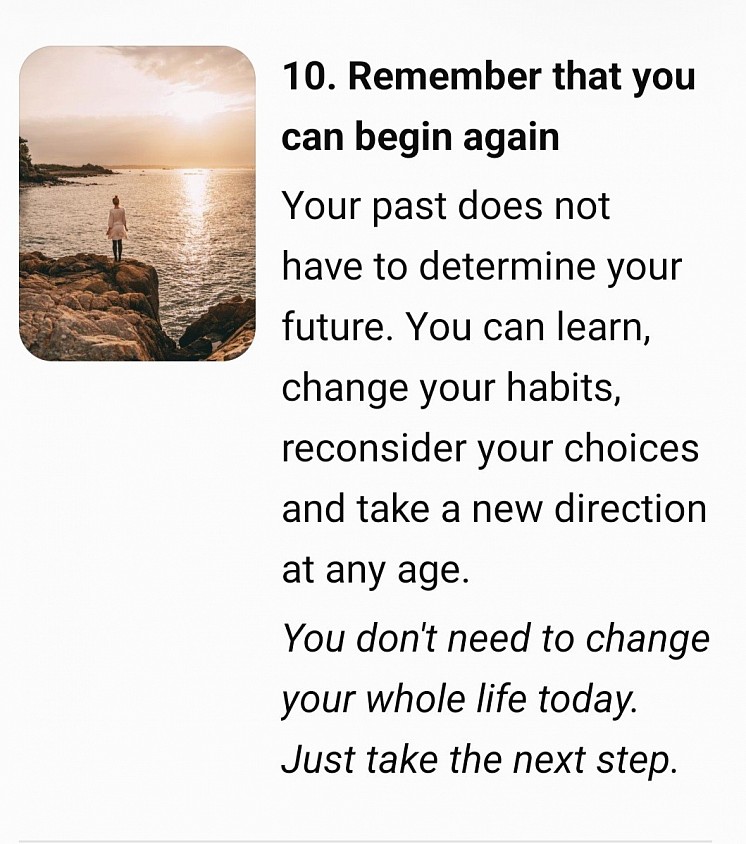
10. Remember it is always possible to begin again.
It's important to remember that you can always begin again, no matter what has happened in the past or how many times things haven't gone to plan. Life doesn't always follow the path we expect, and we all experience setbacks, disappointments, mistakes and moments when we feel we've lost our way. But one of the most reassuring things to understand is that every new day brings another opportunity to make a different choice, change direction or take a small step towards something better. You don't have to have everything figured out, and you don't need to wait for the perfect moment to make a fresh start. Perhaps you've neglected your health, lost your confidence, drifted away from people, given up on a dream or simply fallen into habits that no longer make you happy. Whatever it is, you can choose to start again. Don't allow yesterday's mistakes or disappointments to define tomorrow's possibilities. Be kind to yourself, accept that you're human and recognise that starting again is not a sign of failure; it's a sign of courage, hope and self-belief. Every day is a new opportunity to turn the page, take a different path and create a life that feels better for you. It's never too late to begin again.
